Lucifer, the fallen angel of the Bible, holds a very different meaning in Anthroposophy compared to the traditional devil we have been taught about. According to Anthroposophy, Lucifer represents the negative feminine polarity, while Ahriman (or Satan) represents the negative masculine polarity. Just as archangels represent virtues, archons represent the shadow of humanity.
Just as we once explored the nature of archangels, it is equally important to discuss negative energetic impulses: the archons. If we learn to identify these impulses, we will be able to recognize the shadow and develop our spiritual discernment in a world overflowing with information.
Before we dive deeper, I want to clarify something essential: Anthroposophy, and mystical schools in general, use metaphorical language. If you read this text through a dogmatic or strictly religious lens, its true meaning will be lost and misinterpreted.
Lucifer in Mystical Schools and Anthroposophy
Lucifer is the metaphor for the fallen angels. While it carries a heavy religious connotation, in Anthroposophy, it refers to an energetic impulse. The “fall” of Lucifer is actually the fragmentation of God’s consciousness, or the Source. It is not inherently “evil,” but rather an exploration of being, individuality, and creativity.
According to Anthroposophy, Lucifer is an archetype of consciousness. We humans have fragmented ourselves until reaching materiality, and Lucifer manifests on Earth when we continue to fragment into chaos. The alternative is that, instead of breaking apart further, we elevate our consciousness to return to the Source.
Many mystical schools remind us that the material world is an illusion. In truth, we are pure light, consciousness, beings of abstract wisdom. Earth is the planet with the highest density; if we choose to fragment further, we lose our psyche and our soul—which is why this process is perceived as “bad.” In the material realm, this extreme density translates into depression, anxiety, personality disorders, eating disorders, and physical illness.
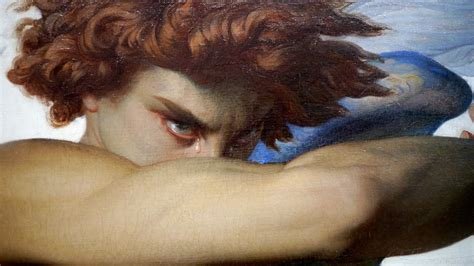
Lucifer goes by many names: the serpent, the Kundalini awakening, the sacral (second) chakra, the awakening of emotions, and Prometheus (the one who brings fire and wisdom to humanity). He is represented by the element of fire, reminding us that not everything is strictly good or bad. If fire materializes too much, it burns and destroys you. But fire is also associated with wisdom and the awakening of consciousness. When we talk about internal fire, it doesn’t harm: it is spark, brilliance, the feeling of creativity, and the capacity to build worlds.
As the light bringer, the one who gave fire to humans, he caused the abstract love that created us to physically manifest as light. He is the impulse that makes us material and drives us to seek who we are outside of love and outside of God. He also gave us free will and the ability to deny our Creator. It is a double-edged sword: it gives you the ability to create and have both a divine and material experience, but you can become so materialized that you lose yourself completely. Looking inward is how we reach God. Looking outward is how we perceive the false light, which is the material world.
The Duality of Lucifer according to Anthroposophy
Lucifer is a dual figure. Some describe him as “the tempter,” while others see him as “the light bringer.” Eventually, there is a reunion with the Source, which is called the crystalline impulse or the “Christ impulse.” This fall is cyclical and occurs throughout centuries and across planets. Some mystical schools describe it as the breath of God (inhale, exhale); others call it the heartbeat of the Divine. Therefore, it is not “bad” in itself, but a necessary part of the cycle of life.
When humans live seeking the shadow or chaos, they experience what Anthroposophy calls a Luciferic fall or a fall of consciousness. When this happens, you rebel against the archangels (the virtues) and begin to fall into lower states of consciousness (the “sins”).
It is vital to remember that, technically, we all experience this fall of consciousness. Some get trapped in the game of illusion. However, we have the free will to listen to the archangels or the archons; that is, to follow your true self or to blindly follow someone or something else. You can follow temptations or walk the path of virtues. Ultimately, we must hold space and acceptance for those who are still exploring and searching for themselves in the shadow.

How the Luciferic Fall Manifests in People Today
Many Christian groups describe Lucifer as someone deeply obsessed with his image, his ego, and with being the smartest or the most beautiful—essentially, a narcissist. At the same time, some mystical schools describe him as a hedonist: someone who only chases instant gratification. Instead of going inward to think and heal what is lacking, he constantly seeks it outside. From both perspectives, Lucifer is the embodiment of the capital sins.
The behavior of the Luciferic impulse encapsulates the seven deadly sins. People trapped in this state are not pillars of the community or examples to follow. They want to live a life full of superficial pleasures:
- Sloth (poor work ethic, procrastination)
- Gluttony (inability to regulate appetites)
- Wrath (inability to control emotions)
- Greed (issues with money and masculine energy/self-worth)
- Pride (moral superiority, believing they alone are creating the “new consciousness”)
- Lust (insatiable sexual appetite)
- Envy (speaking poorly of those doing better than them)
- The primordial sin that encapsulates them all is pure selfishness.
A person manifesting the Luciferic fall of consciousness may appear to have a lot of knowledge, but they lack true wisdom. Or they may have knowledge, but lack morality. In modern spiritual communities, this is often reflected in the phrase, “Evil doesn’t exist” (a concept known as spiritual bypassing). While this phrase may be true in higher planes of existence, it is not true here on Earth. Here, there is contrast: suffering and joy, light and shadow. This contrast is the very tool designed to help us grow.
Lucifer gets lost in the sphere of emotions. He individualizes them too much, believing the emotional world is the only thing that matters. Hyper-individuality is a gift from Lucifer: in balance, it becomes self-love and boundaries, but when taken to the extreme, it devolves into narcissism.
Being a mythomaniac, Lucifer cannot live in reality because living in reality hurts. Reality reflects everything he needs to change, so he flees from it through lies. A person with this fall of consciousness does not truly know themselves. They lie even about their own happiness and what they want in life, constantly rewriting their story. This is why Lucifer is the archetype of the harlequin, the jester, the clown: the ultimate distractor.
These individuals often play the victim; they become martyrs for a cause or ideology. They constantly need an enemy, and if they don’t have one, they invent it. When you speak to them, it feels like reasoning with a child. Lucifer disguises himself as a rebel without a cause: they follow movements without discernment and become so ungrounded they lose their sense of reality. The ultimate goal is indeed to return to the Source, but it must be done through the grounded path of virtues.

Examples of Luciferic Consciousness in Modern Life
A clear example can be found in certain mainstream artists and public figures backed by massive industries. Even if their lyrics seem empowering, the heavy, chaotic beats behind them tell a different story. Their image might mimic a “being of light,” but ultimately, they are puppets playing a role. The spectacle itself—the heavy makeup, the flashy clothes, the stage lights—is an illusion; it is what Anthroposophy calls the false light.
Other examples include:
Inability to regulate emotions: Outbursts of anger, extreme melancholy, mania, or despair. They cannot accept criticism (fueling cancel culture) and are hypersensitive and hyper-emotional.
Inability to ground goals: A lack of discipline to carry out a life plan or finish projects.
Extreme escapism: If they experience a spiritual awakening, they spend too much time in the astral plane or become obsessed with holistic medicine without doing the inner work. They are highly creative but fail to anchor that creativity into the Earth.
Rudolf Steiner wrote that these individuals speak before truly understanding energy. They act as megaphones, choosing a political party, a dogma, or a belief system for life without questioning it. For instance, people who preach without ever having read the original texts, repeating a script they don’t comprehend. They cannot create independence; they rely on collectives and external noise to fill their internal void.
We see this when social movements or ideologies lose their center. A movement might begin with a crystalline, light-filled intention for justice or balance, but when it falls into Luciferic consciousness, it becomes an extreme, hyper-emotional dogma. Followers stop planning, ignore how their actions affect others, and listen only to their internal noise. They fight against anything resembling order, discipline, or willpower. This creates cognitive dissonance: they hold a capacity for light, but it is a false light that self-destructs. Archetypically, they lack a healthy grounding “father” figure or the structuring masculine energy needed to find balance.
The beings who fell during Lemuria and Atlantis are still here during this cycle’s closing, manifesting in grotesque ways. Even those who claim to have a spiritual awakening fail to fully open their hearts. When this happens, love hurts them, and they become overly reactive. This occurs with fallen psychics—they might read your tarot cards beautifully, yet struggle with extreme grounding issues or hypersexuality. That is why it’s crucial to observe how spiritual teachers actually live: if someone gives relationship advice but has a chaotic personal life, they might not be the best guide to follow.

The Connection Between Lucifer and Ahriman
Ahriman uses Lucifer like a puppet. Because Ahriman lacks his own creative energy (since true creation comes from the divine feminine/mother), he creates through Lucifer and manipulates emotionally to steal that creative spark. These outbursts stem from the lower chakras, and this is exactly what negative polarity beings feed on: they use this chaotic human energy as a battery. We see the darkest extremes of this dynamic in global scandals of human exploitation, where individuals in power feed off the purity and life force of the vulnerable.
All these dark or chaotic energies only work if we give them our attention. Politics, dark agendas, and loveless systems desperately need humans to focus their energy on them to survive.
We are at a profound turning point on Earth. The impulse and the examples of Lucifer are not here to scare us, but to help us gain spiritual discernment—both with others and, most importantly, within ourselves.
THANK YOU FOR READING
I write and paint about anthroposophy, self-knowledge and the art of following your own path. No ads, no gurus, no rush. Every coffee turns into writing time and paint for the next canvas.